AC Troubleshooting
Why Your AC Blows Warm Air
Warm air from an AC usually traces to settings, airflow, or refrigerant. Run these checks in order before you call for repair.
Last updated: October 16, 2026.
An air conditioner that blows warm air on a hot Front Range afternoon feels like a betrayal. The unit runs, the vents push air, and the house stays warm. The cause usually sits in one of three places: the thermostat, the airflow, or the refrigerant. This guide walks through the checks in order, from the easiest fix to the faults that need a technician.
Start at the thermostat and work outward. Each check takes a minute or two, and you will either fix the problem or gather the details that help us find it fast.
Start with the thermostat
Check that the thermostat sits on cool, not on heat or off, and that the set temperature sits below the room temperature. Then check the fan setting. A fan set to on blows room air through the vents all the time, even between cooling cycles, and that air feels warm. Set the fan to auto so the blower runs only when the AC cools.
If the thermostat runs on batteries, swap in fresh ones. A weak battery can leave the thermostat confused, and the AC may run the blower without running the compressor. Give the unit a few minutes after each change, because an AC needs time to build cooling after a restart.
Airflow checks
Pull the filter and hold it to the light. A clogged filter chokes airflow, the indoor coil gets too cold, and the unit can freeze up and blow warm air. Swap in a clean filter and open every vent in the home. Closed vents in unused rooms can starve the coil the same way.
Check the return vents for rugs, couches, and boxes that block them. A blocked return starves the whole system, and the far rooms suffer first. Our How to Change Your Furnace Filter guide shows the filter steps, and the same filter serves the AC in summer.
Look outside
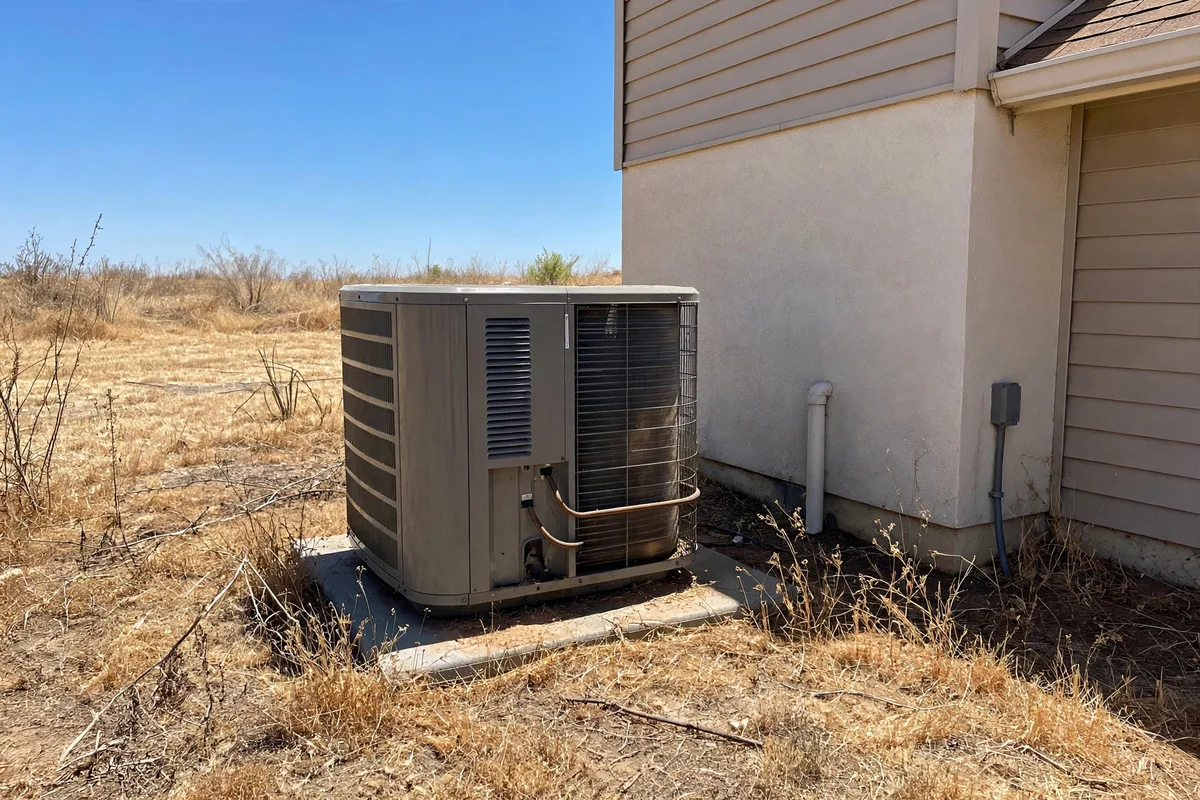
Walk outside and look at the outdoor unit. It needs clear air on all sides to shed heat. Leaves, cottonwood fluff, grass clippings, and snow fences can coat the coil and trap heat, so the unit cannot cool the refrigerant. Clear debris for a couple of feet around the unit and keep plants from crowding it.
Check the breaker panel for a tripped AC breaker, and check that the outdoor disconnect sits on. If the outdoor unit never runs while the indoor blower pushes air, the compressor may have no power. Reset a tripped breaker once, and call us if it trips again.
What we check on a visit
On a warm-air visit, we check airflow first: filter, blower, ducts, and vents. Then we check the refrigerant charge and the coil for dirt or ice. Low refrigerant points to a leak, and a leak needs a repair, not just a top-off, because refrigerant escapes through the same hole again.
Our AC Repair & Installation team handles warm-air calls across Colorado. Tell us when the warm air started, whether the outdoor unit runs, and whether ice shows on the lines, and we will trace the cause instead of guessing.
Further reading: The National Weather Service heat safety guide covers hot-weather risks and how to stay cool during a heat wave. National Weather Service heat safety guide
Frequently Asked Questions
An outage can trip the breaker or scramble the thermostat. Check the breaker, reset the thermostat to cool, and give the unit a few minutes to restart.
Yes. A coil caked with cottonwood fluff, dust, or grass clippings cannot shed heat, so the air inside stays warm. Keep the unit clear and clean.
Midday sun and peak heat load can outrun a struggling unit. If the air cools again by evening, the unit may need a check for airflow or charge.
Yes. Low refrigerant cuts cooling power and can freeze the coil. A technician finds the leak, seals it, and restores the charge.
No. A lower setting only runs the unit longer. If the air stays warm, the unit has a fault that a lower setting will not fix.