Gas Furnace Services
Furnace Repair & Installation in Colorado
When a Colorado furnace quits on a cold night, the house cools fast. We repair furnaces that blow cold air, rattle, cycle oddly, or stop outright, and we install new furnaces sized for Colorado homes.
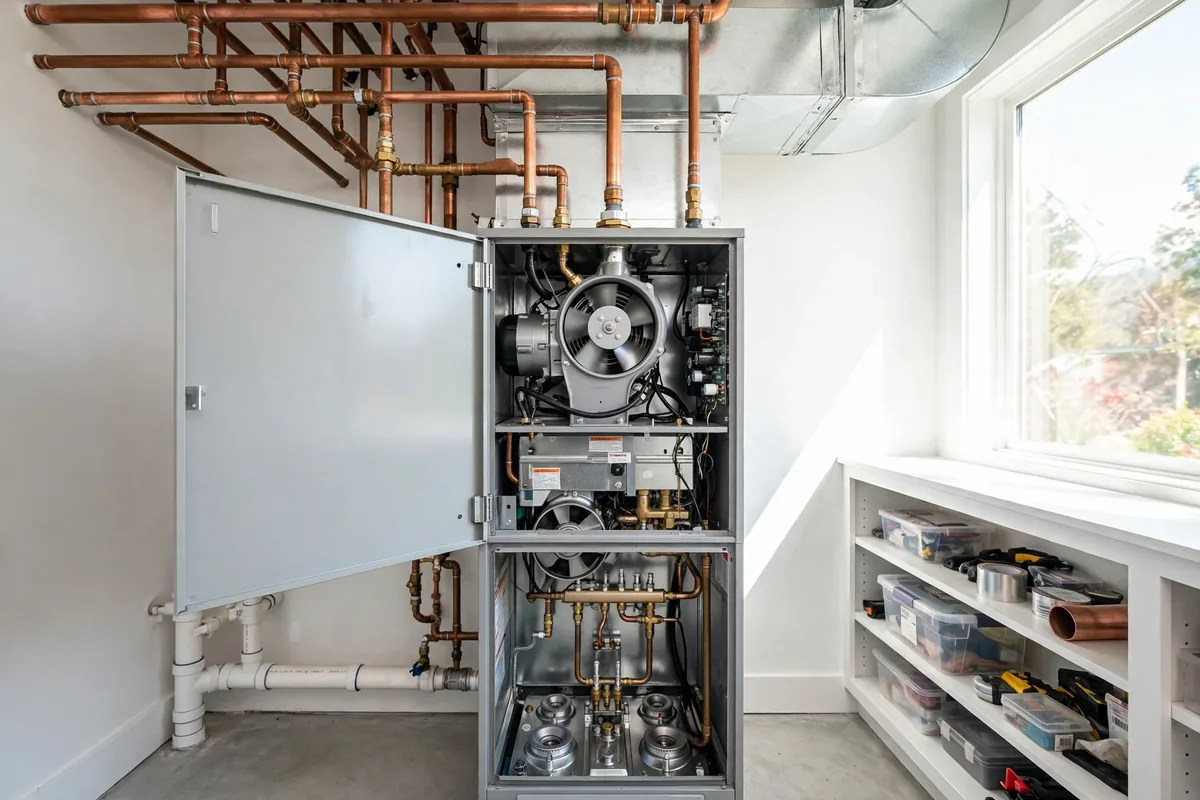
Most Colorado homes heat with a furnace that pushes warm air through ductwork. Long winters, dry air, and high altitude wear on burners, blowers, and controls, so a furnace that ran fine last winter can struggle this one. Our work starts with finding the fault, not swapping parts at random. We test the system, explain what failed in plain words, and lay out the repair or replacement options so you can decide.
For the full picture of how we serve homes across the state, see the homepage. This page covers furnaces only. For a system that heats and cools from one unit, see heat pump installation and repair. For homes heated by water and radiators, see boiler repair and installation.
Signs Your Furnace Needs Attention
- Cold air from the vents. The blower runs, but the air never warms up.
- Short cycling. The furnace starts and stops in quick bursts instead of running a full cycle.
- New sounds. Banging, rattling, squealing, or a loud boom at startup.
- A burner flame that looks yellow. A steady blue flame is normal. A yellow, flickering flame calls for a check.
- Rooms that never feel even. Some rooms warm up while others stay cold.
- A furnace that will not start. No heat at all, even with the thermostat set to heat.
If you smell gas near the furnace, leave the house at once and call your gas utility or 911 from outside. Do not flip switches or light anything.
Furnace Repair
Furnace repair covers the parts that fail most often in Colorado homes. We service ignition and pilot systems, flame sensors, blower motors, limit switches, thermostat wiring, gas valves, and controls. We also inspect the heat exchanger and venting, since cracks or blockages there can send exhaust where it does not belong.
During a repair visit, we test the furnace after the fix and show you how it runs. If we find a second issue forming, we tell you about it and leave the choice with you. We never start extra work without your say-so.
Gas Fireplace Service
We also service gas fireplaces as part of our heating work. That includes pilot and thermocouple trouble, a fireplace that will not stay lit, weak flames, soot on the glass, and venting checks. If your furnace and fireplace both act up, tell us when you call so we can plan for both in one visit.
When a Furnace Fits, and When It Does Not
A furnace fits a home that already has ductwork and needs strong, steady heat through a long winter. Gas furnaces suit homes with a gas line. Electric furnaces suit homes without one, and they pair well with a heat pump or an air conditioner for summer cooling.
A furnace does not fit a home with no ductwork. Adding ducts to a finished home can mean opening walls and ceilings, and the result may still leave rooms uneven. In that case, ductless mini-split services often make more sense, since each room gets its own wall unit. Homes heated by radiators or radiant floors belong on the boiler page or the radiant heating page.
Try This Before You Call
A furnace that will not start often comes down to a setting, a filter, or a switch. These checks take a few minutes.
- Thermostat: set to Heat, fan set to Auto, temperature set above the room temperature. If the display is blank, replace the batteries.
- Furnace filter: pull it out. If it looks gray and packed with dust, put in a fresh one. A clogged filter can shut the furnace down.
- Power switch: the switch on the wall near the furnace looks like a light switch. Make sure it is on.
- Breaker: find the furnace breaker in your panel. If it has tripped, reset it once.
- Vents: make sure supply vents are open and not blocked by furniture, rugs, or curtains.
If the system still will not run right after these checks, call us and describe what you found.
How Furnace Repair and Installation Work
- You call, we dispatch. Describe what the furnace is doing. Sounds, smells, and when the trouble started all help us send the right technician.
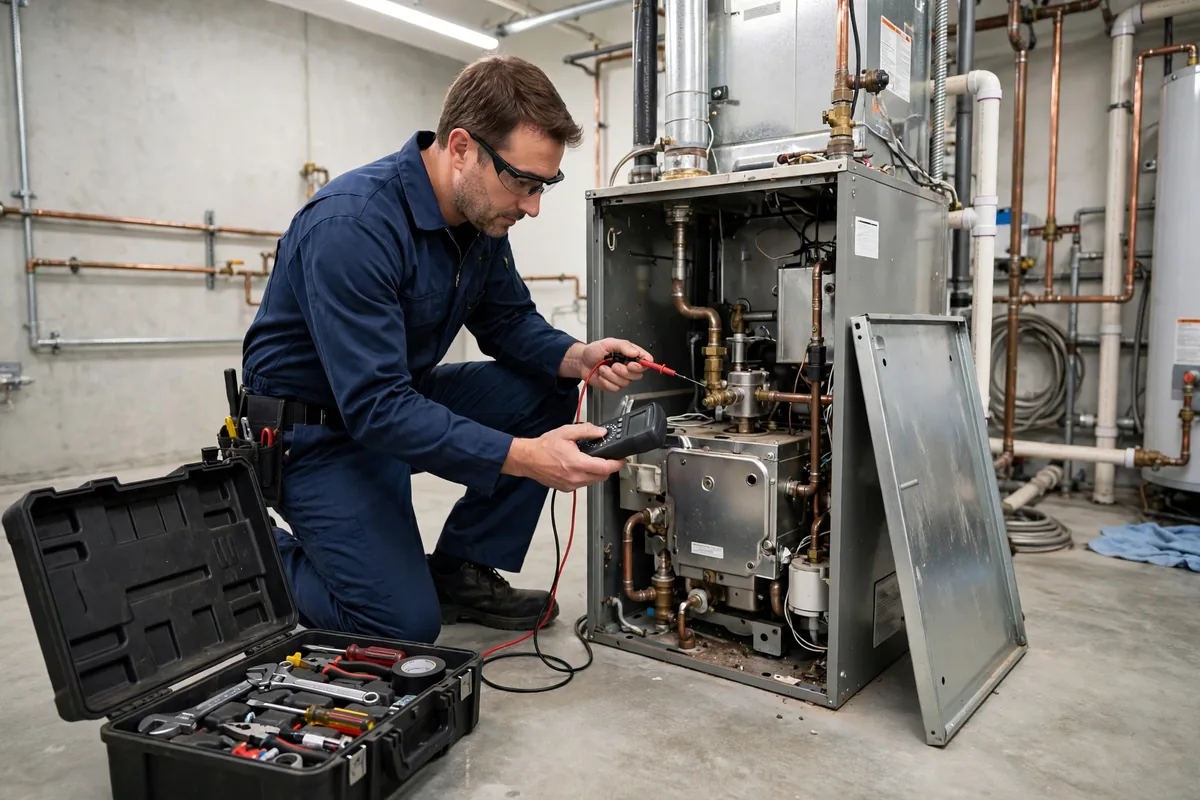
- We test the full system. We check the thermostat, filter, ignition, blower, burner, venting, and controls, not just the part that looks broken.
- We explain in plain language. We walk you through what we found, and lay out repair or replacement, including what each option involves for your home.
- We fit parts matched to your furnace. Repairs restore the failed part. Installations set a new furnace sized for your home and ductwork, with venting and gas or electrical connections done to match.
- We verify before we leave. We run the furnace through a full cycle, check airflow and temperature at the vents, and show you the thermostat settings and filter location.
What You Can Expect
Expect a clear explanation before any work starts. We show you the failed part when we can, describe what the repair involves, and answer questions in plain words. During an installation, expect the old unit to come out, the new unit to go in, and the system to run through a full test before we leave.
After the visit, keep the area around the furnace clear, check the filter on a regular schedule, and keep vents open and unblocked. If anything sounds or smells off after a repair, call us and describe it. A yearly tune-up catches worn parts before they fail in the coldest week of the year.
How a Furnace Compares With Other Heating Options
A furnace heats air and moves it through ducts. A heat pump moves heat in and out of the home and cools in summer too, which suits homes that want one system for both seasons. A boiler heats water for radiators, baseboards, or radiant floors, which suits homes built around hydronic heat. A mini-split heats and cools single rooms without ducts, which suits additions, garages, and rooms the ductwork never reached.
If your heat fails without warning on a cold night, see emergency HVAC repair.
Frequently Asked Questions
A furnace can blow cold air when the filter is clogged, the pilot or ignition has failed, the flame sensor is dirty, or the thermostat is set to fan instead of heat. Check the thermostat setting and the filter first. If the air stays cold, call us and describe what the furnace is doing.
Short cycling often comes from a clogged filter, a thermostat placed near a heat source, or a limit switch that trips when the furnace overheats. A dirty filter is the most common cause, so check it first. If the furnace keeps cycling after a filter change, it needs a check.
Leave the house at once and call your gas utility or 911 from outside. Do not flip light switches, do not use a phone inside the house, and do not light anything. Stay outside until the utility or emergency crews say it is safe to go back in.
Check the filter each month during the heating season and change it when it looks gray and clogged. Homes with pets, construction dust, or wildfire smoke need changes more often. A clean filter protects airflow and keeps the furnace from overheating.
Yes. Tell us about the fireplace when you call so we can plan for both in one visit. We check the pilot, thermocouple, burner, and venting, and we look for soot buildup or weak flames.
A furnace can trip the breaker when the blower motor strains, the filter is badly clogged, or wiring has worn through. Reset the breaker once and watch what happens. If it trips again, leave the furnace off and call us so we can find the fault.
Watch for soot buildup around the furnace, a burner flame that burns yellow or flickers instead of steady blue, a carbon monoxide detector that goes off, or an unusual chemical smell near the furnace. A cracked heat exchanger can let carbon monoxide into the air supply. If your carbon monoxide detector alarms, leave the house and call 911 from outside. Otherwise, turn the furnace off and call us so we can inspect it.
Last updated: October 16, 2026.
Sources and Further Reading
These government pages explain the same topics in more depth.