Evaporative Cooling Services
Evaporative Cooler Services in Colorado
Evaporative coolers suit dry Colorado air. We service pads, pumps, and water lines, and we help owners keep coolers running through summer.
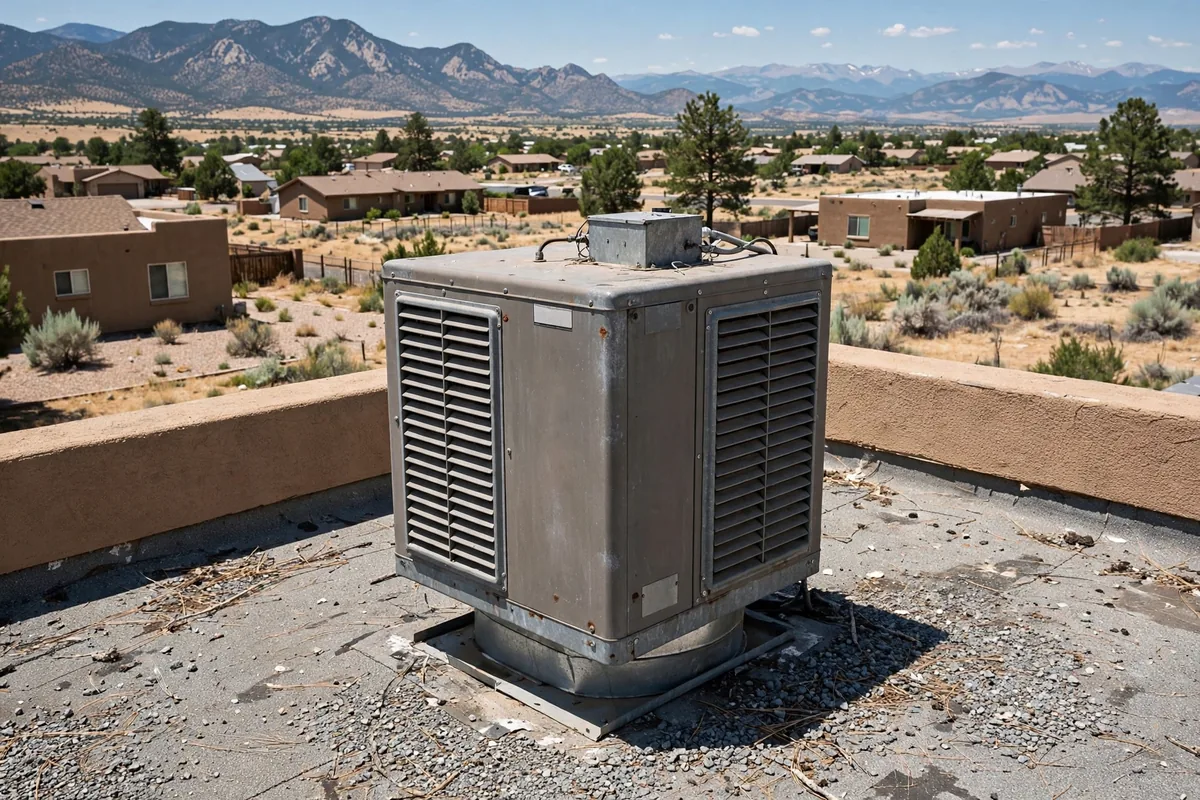
An evaporative cooler, sometimes called a swamp cooler, pulls hot dry air through wet pads and blows the cooled air into the house. It uses water and a fan instead of refrigerant, which suits the dry air across much of Colorado. On a dry summer day, a well-kept cooler can drop the indoor temperature by a wide margin while keeping the air fresh.
For the full picture of how we serve homes across the state, see the homepage. This page covers evaporative coolers only. For cooling that works in any humidity, see AC repair and installation. For single-room ductless cooling, see ductless mini-split services.
Signs Your Evaporative Cooler Needs Attention
- Warm air from the vents. The cooler runs, but the air never cools down.
- Musty smell. The air smells stale or swampy when the cooler starts.
- Weak airflow. The fan runs, but little air reaches the rooms.
- Water leaks. Drips from the unit, the roof, or the supply line.
- Pump noise or no water flow. The pump hums, rattles, or runs dry.
- Mineral crust on the pads. White or crusty buildup on the pads or in the pan.
What Evaporative Cooler Service Covers
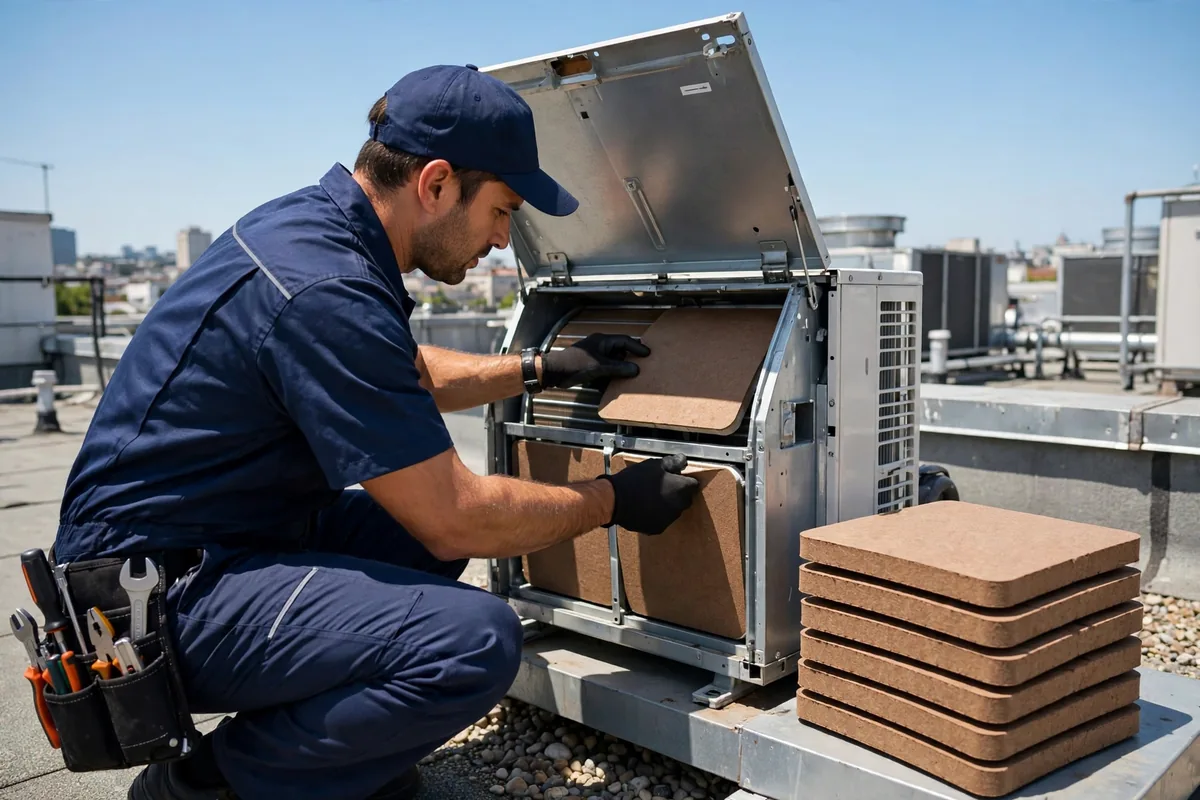
Service covers the parts that wear out in a cooler: pads, pump, float valve, water line, belt, motor, and blower. We drain the pan, clean mineral buildup, replace worn pads, check the pump and float, and test airflow and cooling at the vents.
We also handle seasonal start-up and shut-down. Start-up opens the water line, checks the pump and pads, and runs the cooler through a full cycle. Shut-down drains the pan and lines, covers the unit, and keeps water from sitting in the pan through winter, where it can freeze and crack fittings.
When an Evaporative Cooler Fits, and When It Does Not
An evaporative cooler fits a dry-climate home that wants cooling with fresh air moving through open windows. It suits homes along the Front Range and the eastern plains, where summer air stays dry for most of the season.
An evaporative cooler does not fit humid days. When monsoon moisture rolls in, the air already holds water, and the cooler adds humidity without dropping the temperature much. A home that needs steady cooling through humid spells suits central AC or a mini-split better. A home that wants heating and cooling from one unit belongs on the heat pump page.
Try This Before You Call
An evaporative cooler that blows warm air often comes down to water, pads, or airflow. These checks take a few minutes.
- Water supply: the valve to the cooler must be open, and the float must let water in. A cooler with no water blows warm air.
- Pads: look at the pads. If they are caked with mineral scale, the cooler cannot cool well.
- Breaker and pump switch: make sure both are on.
- Window: open a window or door a crack on the far side of the house. An evaporative cooler needs somewhere for the air to go.
- Pump sound: if the pump runs but no water reaches the pads, turn the cooler off and call us.
If the trouble stays after these checks, call us and describe what you found.
How Evaporative Cooler Service Works
- You call, we dispatch. Describe the symptoms. Smell, leaks, noise, and when the trouble started all help us send the right technician.
- We test the full system. We check the pads, pump, float, water line, belt, motor, and blower.
- We explain in plain language. We walk you through what we found and lay out repair or seasonal service, including what each option involves for your unit.
- We fit parts matched to your cooler. We drain and clean the pan, replace worn pads, repair or replace the failed part, and set the water level.
- We verify before we leave. We run the cooler through a full cycle, check airflow and cooling at the vents, and show you how to open and close the water supply.
What You Can Expect
Expect a clear explanation before any work starts. During a service visit, expect the pan to drain, the pads to come out for inspection, and the pump and float to get checked. During a shut-down, expect the water to drain and the unit to get covered for winter.
After the visit, keep the area around the cooler clear and watch for drips under the unit or along the supply line. A yearly tune-up before summer keeps pads, pump, and water flow in shape for the hot months.
How an Evaporative Cooler Compares With Other Cooling Options
An evaporative cooler cools with water and air. A central AC cools with refrigerant and works in any humidity, but it recirculates indoor air instead of pulling in fresh air. A mini-split cools single rooms without ducts and works in humid weather too. A heat pump heats and cools from one unit.
Frequently Asked Questions
Start the cooler when daytime highs stay warm and the air stays dry. Open the water supply, check the pads and pump, and run the cooler through a full cycle before the first hot week. If the pads look crusty or the pump sounds rough, call us before the season starts.
A musty smell usually comes from stale water in the pan or pads that stayed wet and dirty. Draining the pan, cleaning mineral buildup, and replacing worn pads clears it. If the smell comes back fast, the pump or the drain may need a check.
Warm air can come from dry pads, a pump that is not moving water, a water supply that is off, or pads clogged with mineral buildup. Check that the water supply is open. If the pads stay dry or the air stays warm, the pump or the float needs a check.
Pads wear out over a season of use, and hard water shortens their life. Check them at the start of each summer and again mid-season. Replace pads that look crusty, torn, or matted, since worn pads cool weakly and smell musty.
Yes. Drain the pan and lines first, then cover the unit so snow and debris stay out. Draining matters most, since water left in the pan or lines can freeze and crack fittings. We handle shut-down as part of seasonal service.
Water can leak from a float valve that sits too high, a cracked pan, a loose water line, or an overflow line that is blocked. Note where the water comes from and shut the water supply off if the leak is heavy. Call us and describe what you see so we can trace it.
Last updated: October 16, 2026.
Sources and Further Reading
These government pages explain the same topics in more depth.