Air Conditioning Services
AC Repair & Installation in Colorado
Hot Front Range afternoons call for steady cooling. We repair AC units that blow warm air, freeze up, or cycle oddly, and we install new systems sized for Colorado homes.
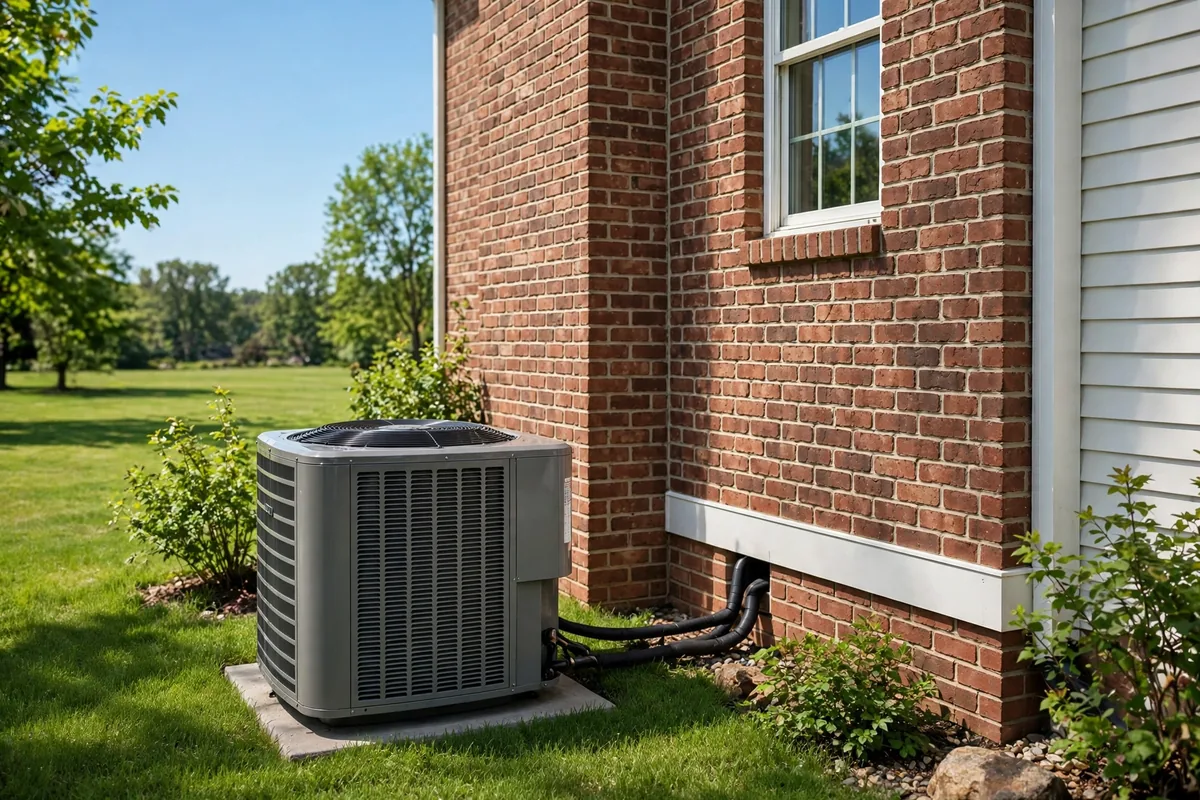
A central air conditioner moves heat out of the house through a coil, a compressor, and a set of refrigerant lines. Colorado adds its own twists: thin high-altitude air, dry summers, dust, and hail season. A system sized for a humid lowland climate may short cycle here, and a unit choked with dust loses airflow fast.
For the full picture of how we serve homes across the state, see the homepage. This page covers central AC only. For a system that heats and cools from one unit, see heat pump installation and repair. For single-room ductless cooling, see ductless mini-split services. For cooling that uses evaporation instead of refrigerant, see evaporative cooler services.
Signs Your AC Needs Attention
- Warm air from the vents. The system runs, but the air never cools down.
- Ice on the lines. Frost or ice on the refrigerant lines or the indoor coil.
- Weak airflow. Some vents push little air, or the whole house feels stuffy.
- Short cycling. The unit starts and stops in quick bursts instead of running a full cycle.
- Water near the indoor unit. Damp spots or drips around the furnace or air handler.
- A breaker that trips when the AC starts. The outdoor unit hums, then the breaker opens.
Central AC Repair
Central AC repair covers the parts that fail most often: contactors and capacitors, fan motors, thermostats and wiring, condensate drains, coils choked with dust, and refrigerant leaks. We test the system, find the fault, and explain it before any work starts.
AC Replacement
Replacement makes sense when a unit breaks down again and again, cools weakly even after repair, or runs with a refrigerant that is hard to source. We size the new unit for your home and ductwork, remove the old unit, set the new one, and test airflow and temperature at every vent.
AC Compressor Repair
The compressor is the heart of the outdoor unit. It pressurizes refrigerant and pushes it through the system. A failing compressor may hum without starting, trip the breaker, or run loudly and cool weakly. Some compressor faults come from a weak capacitor or worn wiring, which we can repair. Others mean the compressor itself has failed, and we lay out the options in plain language.
Refrigerant Recharge
Refrigerant does not get used up. A system that runs low has a leak. Before any recharge, we look for the leak, since topping off a leaking system only helps for a short while. When the leak is found and fixed, we recharge the system with the correct refrigerant for your unit and test the cooling.
When Central AC Fits, and When It Does Not
Central AC fits a home with ductwork that wants even cooling in every room from one system. It also fits a home that already heats with a furnace, since the same ducts carry the cool air in summer.
Central AC does not fit a home with no ductwork. Adding ducts to a finished home can mean opening walls and ceilings. In that case, ductless mini-splits often make more sense. A home in a dry area that wants lower-energy cooling may suit an evaporative cooler, which cools with water and air instead of refrigerant.
Try This Before You Call
An AC that blows warm air often comes down to a setting, a filter, or a tripped breaker. These checks take a few minutes.
- Thermostat: set to Cool, fan set to Auto, temperature set below the room temperature. If the display is blank, replace the batteries.
- Filter: pull it out. If it looks gray and packed, put in a fresh one. A clogged filter can freeze the indoor coil.
- Breaker: if the AC breaker has tripped, reset it once. Also check that the outdoor disconnect switch is on.
- Outdoor unit: clear leaves and debris from around it, and keep open space on all sides.
- Vents: make sure all supply vents are open and not blocked by furniture or rugs.
- Iced-over lines: if you see ice on the lines, turn the AC off and run the fan only until the ice melts, then call us.
If the system still will not run right after these checks, call us and describe what you found.
How AC Repair and Installation Work
- You call, we dispatch. Describe the symptoms. Warm air, ice, noise, and when the trouble started all help us send the right technician.
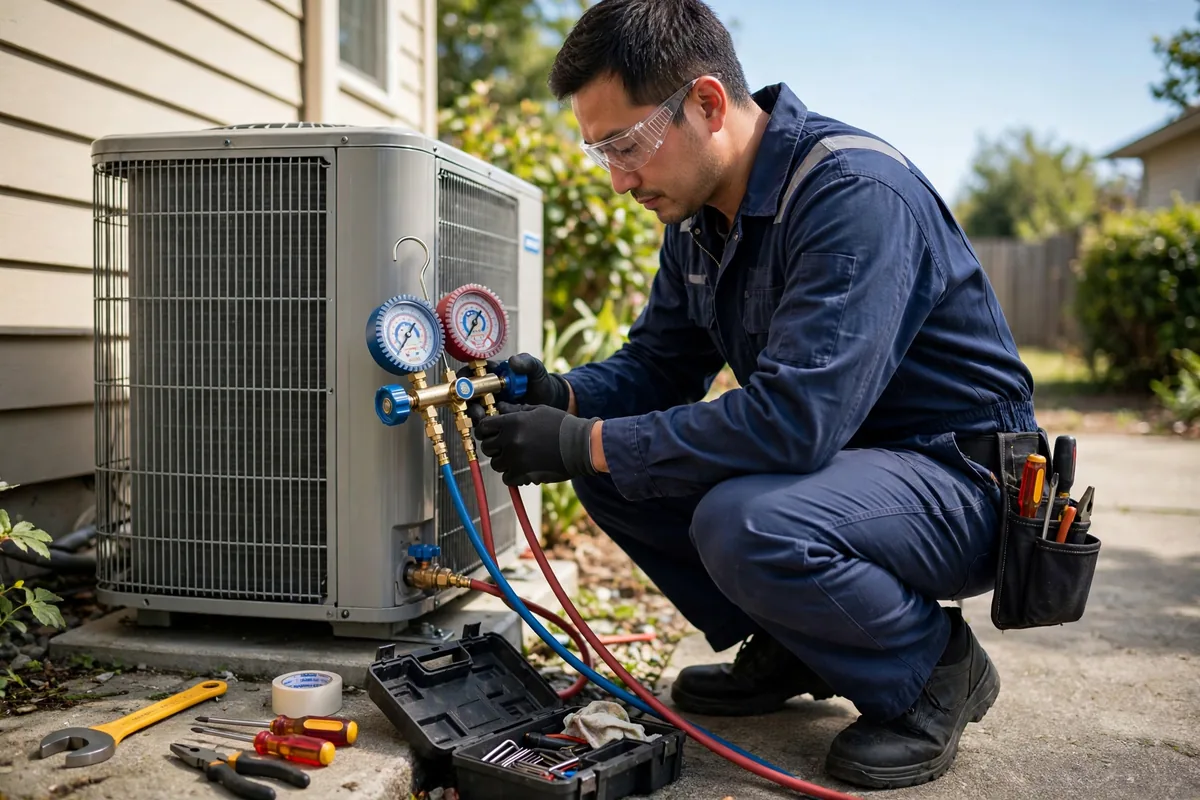
- We test the full system. We check airflow, filters, coils, the condensate drain, electrical parts, and refrigerant charge.
- We explain in plain language. We walk you through what we found and lay out repair or replacement, including what each option involves for your home and ductwork.
- We fit parts matched to your AC. Repairs restore the failed part. Installations set a new unit sized for your home, with line sets, drainage, and controls matched to the house.
- We verify before we leave. We run the system through a full cooling cycle, check airflow and temperature at the vents, and show you the filter location and thermostat settings.
What You Can Expect
Expect a clear explanation before any work starts. We show you the iced coil or the failed part when we can, and we describe what the repair involves. During an installation, expect the old unit to come out, the new unit to go in, and the system to run through a full test before we leave.
After the visit, keep the filter clean, keep plants and debris clear of the outdoor unit, and keep the condensate drain line clear. A yearly tune-up checks coils, refrigerant, and airflow before the first hot week of summer.
How Central AC Compares With Other Cooling Options
Central AC cools only. A heat pump heats and cools from one unit, which suits homes that want both seasons covered. A mini-split cools single rooms or zones without ducts. An evaporative cooler cools with water and air, which works well on dry Colorado days and poorly on humid ones.
Frequently Asked Questions
Warm air can come from a clogged filter, a tripped breaker on the outdoor unit, low refrigerant charge, or a failed capacitor. Check the filter and the breaker first. If the air stays warm, call us and describe what the outdoor unit is doing.
Ice forms when airflow drops or the refrigerant level runs low. A clogged filter, a dirty coil, or a blower problem can all starve the coil of air. A leak can drop the level. Both causes make the coil freeze, and both need a check.
No. Turn the system off and let the ice melt fully. Running a frozen system can strain the compressor and make the damage worse. Once the ice has melted, call us so we can find why it froze.
Weak airflow can come from a clogged filter, closed or blocked vents, a blower problem, or ductwork that has come loose. Check the filter and make sure vents are open and unblocked. If airflow stays weak, the blower or the ducts need a check.
A breaker can trip when the compressor strains to start, a capacitor fails, or wiring has worn through. Reset the breaker once and watch what happens. If it trips again, leave the AC off and call us so we can find the fault.
Yes. Refrigerant runs in a sealed loop, so a low level means refrigerant escaped somewhere. We look for the leak before any recharge, since topping off a leaking system only helps for a short while. Once the leak is fixed, we recharge the system and test the cooling.
SEER2 is the efficiency figure printed on new air conditioners. It measures how much cooling you get for each unit of electricity, tested under conditions closer to a real duct system than the old SEER test. A higher SEER2 number means the unit uses less electricity for the same cooling. SEER2 numbers run lower than old SEER numbers for the same unit because the test is tougher, so the two are not directly comparable.
Last updated: October 16, 2026.
Sources and Further Reading
These government pages explain the same topics in more depth.