Carbon Monoxide Protection
Carbon Monoxide Safety at Home
Carbon monoxide has no color, smell, or taste. Detectors, yearly tune-ups, and a clear plan are what stand between your home and a silent hazard.
Last updated: October 16, 2026.
Carbon monoxide kills quietly. It has no color, no smell, and no taste, and it builds up when fuel burns without enough air or when a vent blocks. A furnace, a boiler, a water heater, a gas stove, a fireplace, and a car in an attached garage can all make it. Headaches, dizziness, nausea, and confusion are the early signs, and they ease outdoors, which makes them easy to mistake for the flu.
This guide covers where carbon monoxide comes from, where detectors belong, what to do when one sounds, and how to keep your home safe year round. Read the detector section first if you have no detectors yet.
Where carbon monoxide comes from
Anything that burns fuel can make carbon monoxide: a gas furnace, a boiler, a water heater, a gas stove, a fireplace, a wood stove, and a car engine. Normal venting carries the gas outside. Trouble starts when a burner runs with too little air, when a vent blocks, or when a heat exchanger cracks and lets combustion gases mix with indoor air.
Winter raises the risk. Homes seal tight against the cold, furnaces run long hours, and snow can block an outdoor vent. A generator run in a garage or near a window can flood a home with carbon monoxide in minutes. Never run a generator, a grill, or a car engine inside a garage, even with the door open.
Where detectors belong
- one on each level of the home, including the basement.
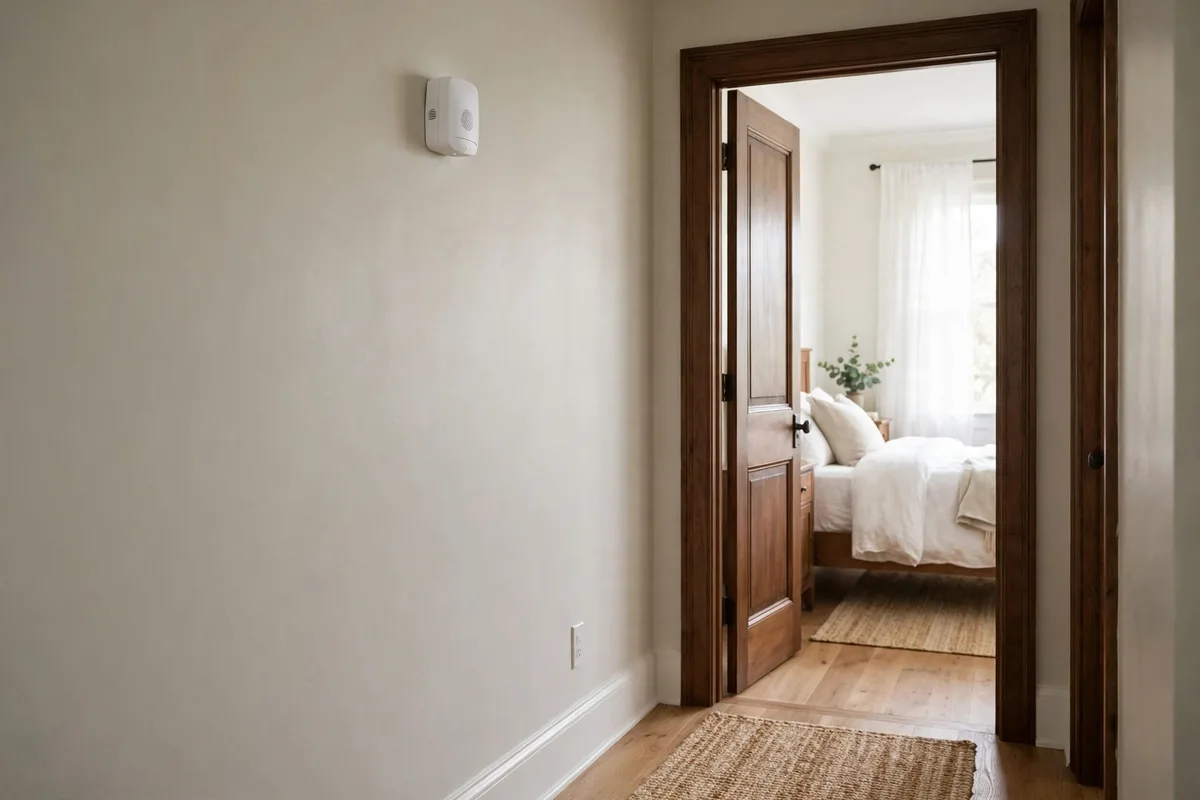
- one outside each sleeping area, so the sound wakes sleepers.
- one near each fuel-burning appliance, such as the furnace and water heater.
- one in or near an attached garage, where car exhaust gathers.
- follow the detector manual for height and spacing, because models differ.
What to do when a detector sounds
- Leave the home at once. Take everyone and every pet outside to fresh air.
- Call 911 from outside. Do not go back inside to open windows, grab pets, or silence the detector.
- Do not re-enter until responders clear the home and find the source.
- Do not run the furnace, the stove, or any fuel-burning appliance until a technician checks it.
- Call us to inspect the furnace, boiler, and vents before you restart any of them.
What carbon monoxide poisoning feels like
Early carbon monoxide poisoning feels like the flu: a dull headache, dizziness, nausea, and tiredness. The difference is that everyone in the home feels it at once, pets may act sick too, and the symptoms ease outdoors and return indoors. That pattern is a warning sign, not a coincidence.
Higher exposure brings confusion, blurred vision, and loss of coordination, and it can knock a person out before they reach the door. That is why a detector matters more than symptom-watching. A detector sounds before the air turns dangerous, while symptoms only show up after exposure already started.
Keeping your home safe year round
Test each detector monthly with the test button, and replace detectors when the manual says to, often after several years of service. Swap batteries on the schedule in the manual, and never paint over a detector or block it with furniture.
Book a yearly tune-up for every fuel-burning appliance. A furnace tune-up checks the burner, the heat exchanger, and the vent for safe operation. Our Maintenance & Tune-Ups page covers what a visit includes, and our Furnace Repair & Installation team inspects burners and vents on every furnace call.
Further reading: The U.S. Environmental Protection Agency carbon monoxide guide explains sources, symptoms, and detector placement. U.S. Environmental Protection Agency carbon monoxide guide
Frequently Asked Questions
Nothing. Carbon monoxide has no color, smell, or taste, which is why detectors matter. Never rely on your nose to catch it.
Put one on each level, outside each sleeping area, and near fuel-burning appliances. Follow the detector manual for height and spacing.
Leave the home at once and call 911 from outside. Do not go back inside to open windows or grab pets until responders clear the home.
Replace detectors when the manual says to, often after several years of service. Test each one monthly with the test button.
Yes, when a furnace burns fuel with too little air or a vent blocks. A yearly tune-up checks the burner and vent for safe operation.