Furnace Troubleshooting
Why Your Furnace Blows Cold Air
A furnace that blows cold air often has a simple cause, and a few checks find it fast. Work through these in order before you call for repair.
Last updated: October 16, 2026.
Cold air from a furnace feels alarming on a winter night, but the cause is often simple. A thermostat set wrong, a clogged filter, or a blower running between heating cycles explains most cold-air complaints. This guide walks through the checks in order, from the easiest fix to the faults that need a technician.
Start at the thermostat and work toward the furnace. Each check takes a minute or two, and you will either fix the problem or gather the details that help us find it fast. If you smell gas at any point, leave the home and call 911 from outside instead of working through this list.
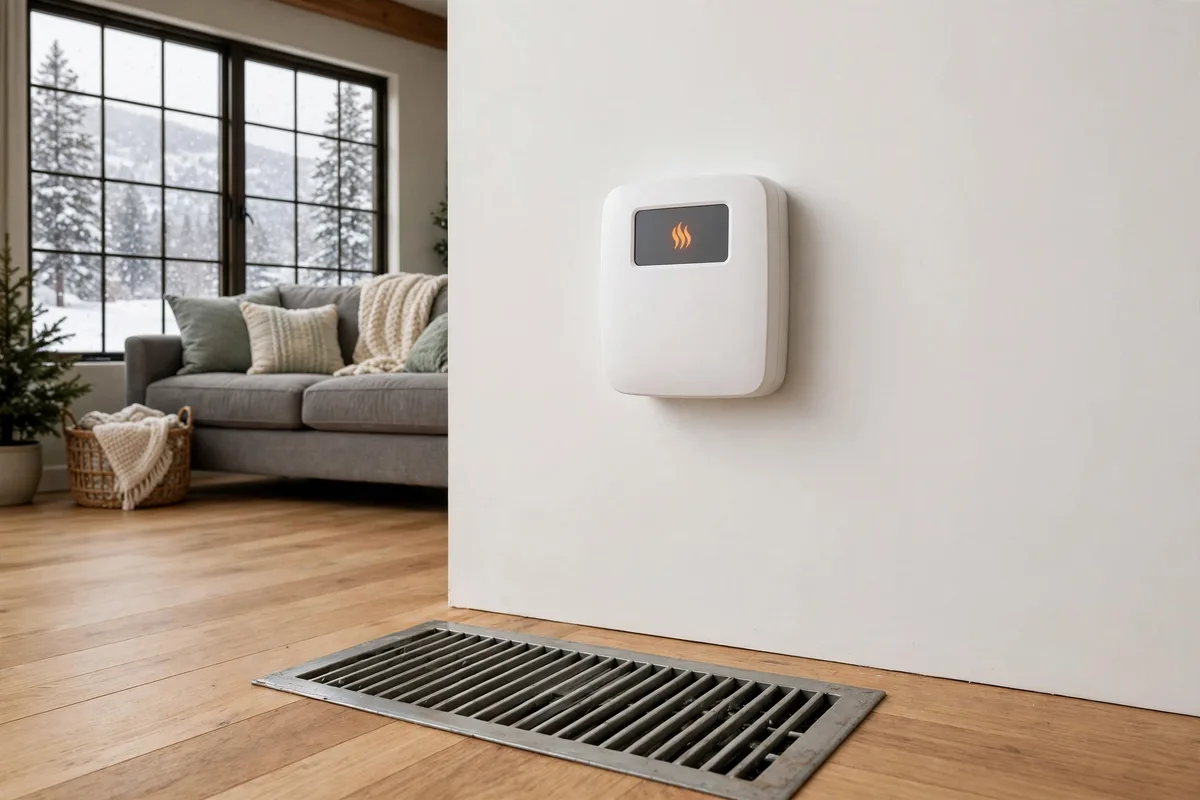
Start with the thermostat
Check that the thermostat sits on heat, not on cool or off, and that the set temperature sits above the room temperature. Then check the fan setting. A fan set to on blows room air through the vents all the time, even between heating cycles, and that air feels cold. Set the fan to auto so the blower runs only when the furnace heats.
If the thermostat runs on batteries, swap in fresh ones. A weak battery can leave the thermostat confused, and the furnace may run the blower without firing the burners. A thermostat mounted in a sunny hall or near a draft reads the wrong temperature, so note where yours sits when you call us.
Check the filter and vents
Pull the furnace filter and hold it to the light. If you cannot see light through it, the filter is clogged. A clogged filter chokes airflow, the furnace overheats, and a safety control shuts the burners off while the blower keeps running. That is the classic pattern behind cold air: the blower runs, the burners stay off, and the vents push cool air.
Swap in a clean filter with the arrow pointing toward the furnace, in the direction of airflow. Then walk the house and open every vent. Closed vents in unused rooms can choke the same airflow, and a couch or rug over a vent starves a whole branch of the ductwork. Our How to Change Your Furnace Filter guide shows the steps with photos in mind.
Look at the furnace itself
Find the furnace switch, which looks like a light switch on or near the unit, and confirm it sits on. Check the breaker panel for a tripped furnace breaker and reset it once if it tripped. Then watch a heating cycle. The burners should fire, the blower should start, and warm air should reach the vents within a few minutes.
If the burners never fire, or if they fire and shut off within seconds, stop there. That pattern points to an ignition fault, a flame sensor fault, or a safety control shutting the furnace down. Those parts sit inside the unit and need a technician. Our Furnace Repair & Installation team checks ignition, flame sensors, and safety controls on every cold-air call.
When cold air means a bigger problem
Cold air with a yellow or lazy burner flame, soot marks near the furnace, or a sharp gas smell points to a combustion problem. Turn the thermostat down, leave the home if you smell gas, and call 911 from outside. Do not relight a pilot or poke at gas parts yourself.
Cold air that comes with banging, rattling, or a furnace that cycles on and off every few minutes also needs a visit. Short cycling wears parts fast and leaves rooms cold, and it often traces to overheating from a clogged filter, a failing blower, or a duct problem. Note what you hear and when it started, because that detail speeds up the diagnosis.
What to tell us when you call
When you call, tell us what the thermostat shows, whether the burners fire, how old the filter looks, and which rooms blow cold. Tell us if the furnace runs nonstop or cycles on and off. Those five details let us bring the right parts and fix the fault in one visit in most cases.
A yearly Maintenance & Tune-Up catches most cold-air causes before winter. We clean the flame sensor, check ignition, test safety controls, and swap the filter, so the furnace fires clean on the first cold night.
Further reading: The U.S. Department of Energy Energy Saver site explains heating upkeep and when to call a technician. U.S. Department of Energy Energy Saver
Frequently Asked Questions
The blower often runs briefly before the burner warms the air. If the air turns warm within a minute or two, the furnace is warming up as it should.
Yes. A clogged filter chokes airflow, the furnace overheats, and a safety control shuts the burner off while the blower keeps running. A clean filter often fixes it.
If the air stays cold and the furnace keeps cycling, turn the thermostat down and call us. Leave the furnace off until we check it when you smell gas or see soot.
One cold room usually points to a closed vent, a blocked duct, or a duct run that loses heat. Check the vent first, then the duct path if you can reach it.
Yes. A thermostat set to fan on instead of auto blows room air between heating cycles. Set the fan to auto and the mode to heat, then watch for warm air.