Heating Options Compared
Furnace vs. Heat Pump: Which Fits a Colorado Home?
A furnace burns fuel for strong, steady heat. A heat pump moves heat from outdoor air and cools in summer too. Here is how each one behaves in Colorado weather.
Last updated: October 16, 2026.
Here is the one-line answer: a gas furnace handles deep cold without a second thought, while a heat pump heats and cools from one unit and works best when sized for cold weather or paired with backup heat. Both heat Colorado homes well. The right pick depends on your home, your fuel options, and how cold your corner of the state gets.
Denver and the Front Range see long winters with cold snaps, and mountain towns sit colder still, with snow that lingers for months. Altitude thins the air, dry air pulls moisture from homes, and a heating system runs hard from fall through spring. This guide compares the two systems on those terms, so you can weigh them with Colorado in mind.
How a furnace heats your home
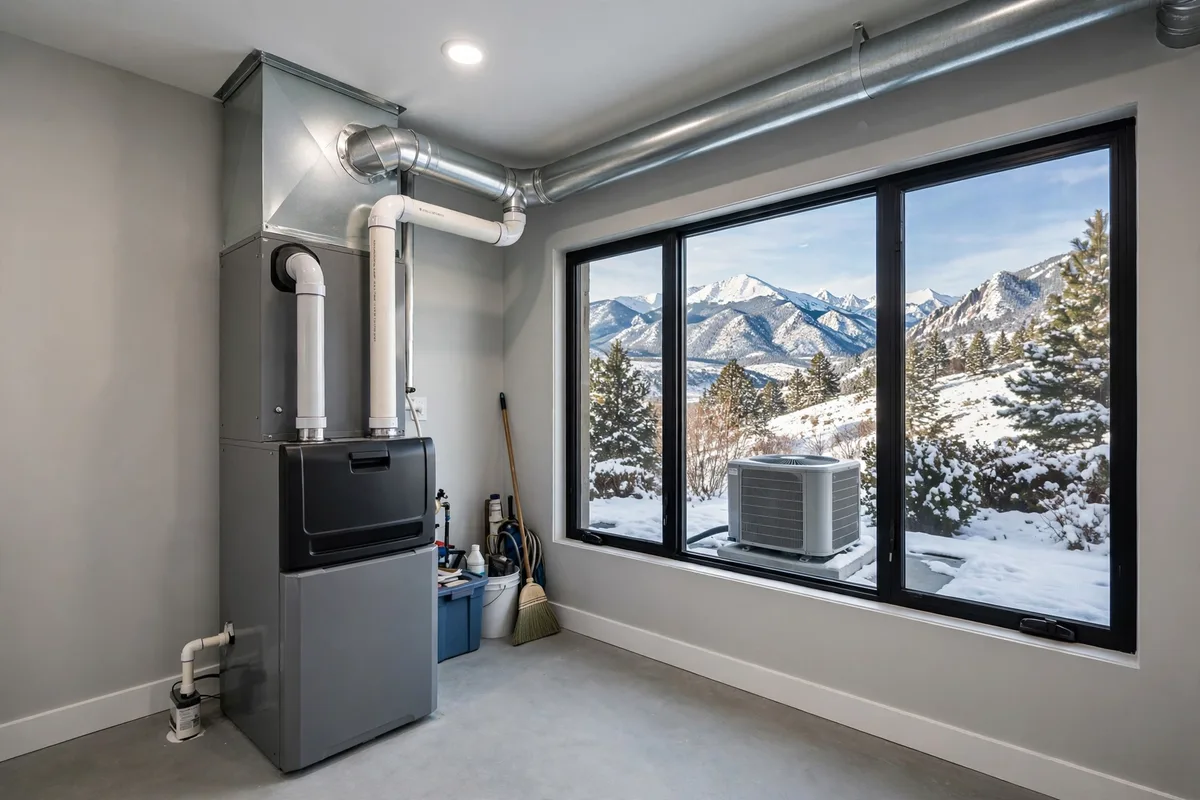
A furnace burns natural gas or propane, warms air in a heat exchanger, and sends that warm air through ducts to every room. The burners fire hard on a cold night, the blower pushes warm air fast, and the house comes back to temperature in a hurry. That punch is why furnaces have heated Colorado homes for decades. They ask little of the outdoor weather, because the heat comes from fuel, not from outdoor air.
Furnaces need ductwork in good shape, a gas line or propane supply, and a vent that carries combustion gases outside. They pair with a separate cooling system in summer, such as an air conditioner or an evaporative cooler. Our Furnace Repair & Installation page covers how we install and service furnaces across Colorado.
How a heat pump heats your home
A heat pump does not burn fuel to make heat. It moves heat from outdoor air into your home, even when the air outside feels cold. In summer, it runs in reverse and moves heat back outside, so the same unit heats and cools. One outdoor unit and one or two indoor units can cover a whole home, and homes without ducts can use wall-mounted heads in each room.
Cold-climate heat pumps keep heating well below freezing, but their output drops as the air gets colder. That is why sizing matters so much in Colorado, and why many mountain homes pair a heat pump with a furnace for the coldest nights. Our Heat Pump Installation & Repair page covers how we size, install, and service heat pumps across the state.
Where each one fits in Colorado
On the Front Range, from Denver and Aurora down to Colorado Springs and Pueblo, winters run cold but milder than the high country. A cold-climate heat pump sized for the coldest days can carry many of these homes, and it cools them through hot, dry summers too. Homes with strong insulation and sealed ducts get the most from a heat pump, because less heat escapes on cold nights.
In mountain towns such as Aspen, Vail, Breckenridge, and Steamboat Springs, the math shifts. Nights run colder, snow piles against outdoor units, and long cold stretches ask more of any heater. A furnace stays the safer main heat source in those towns, and a heat pump can still help in shoulder seasons. Homes without a gas line may lean toward a heat pump with electric backup heat, and a technician should size that backup for the coldest night, not for an average one.
Energy use and upkeep
A furnace uses gas for heat and electricity for the blower. A heat pump uses electricity for the whole job, and it moves more heat than the electricity it draws, which keeps energy use steady across mild weather. In deep cold, a heat pump works harder and leans on backup heat, so the gap narrows on the coldest nights of the year.
Both systems need the same habits. Change the filter on schedule, keep vents open and clear, and book a Maintenance & Tune-Up once a year. A heat pump adds one more chore: keep snow, leaves, and ice clear of the outdoor unit so air can move through the coil. A buried unit starves for air and heats poorly, no matter how well the indoor side runs.
What to check before you decide
- ductwork: leaky or crushed ducts waste heat from either system, and a duct check belongs before any install.
- fuel: a home with a gas line can run a furnace, while a home without one may suit a heat pump better.
- electrical panel: a heat pump and its backup heat draw real power, so the panel must have room for the load.
- insulation and windows: a leaky home punishes any heater, and sealing gaps pays off before new equipment.
- rooms: additions, bonus rooms, and rooms over garages may need their own heat, and a mini-split can cover those.
The bottom line for Colorado homes
A furnace wins on raw cold-weather punch and on homes that already have ducts and gas. A heat pump wins on doing two jobs from one unit and on homes that want to heat and cool without fuel. Many Colorado homes split the difference with a heat pump and a furnace together, and the heat pump carries mild weather while the furnace covers the coldest nights.
Tell us what your home has now, how it heats on a cold night, and which rooms stay cold. We will walk through the options for your home and lay out the next steps in plain language. Get an Estimate or call us at (303) 879-1746 and we will help you pick the setup that fits.
Further reading: The U.S. Department of Energy Energy Saver site covers heating options and upkeep in plain language. U.S. Department of Energy Energy Saver
Frequently Asked Questions
Yes, when it is sized for cold weather and paired with backup heat for the coldest nights. In mountain towns, a furnace or a dual-fuel setup often makes more sense as the main heat source.
Yes. A heat pump runs in reverse in summer and cools the same way an air conditioner does, so one unit covers both seasons.
No. A furnace only heats. Homes with a furnace use a separate air conditioner, evaporative cooler, or mini-split for cooling.
Both last many years with steady upkeep. A heat pump runs year round, so it racks up more hours, while a furnace rests through summer. A yearly tune-up keeps either one in shape.
Yes. Many Colorado homes pair a heat pump with a furnace. The heat pump carries mild weather and the furnace takes over when cold sets in.