Winter Energy Bills
Why Your Winter Energy Bill Spikes
Winter bills spike because heat runs longer, drafts leak warm air, and the furnace works harder on cold nights. Most causes yield to a short list of fixes.
Last updated: October 16, 2026.
A winter bill that jumps from one month to the next feels like a shock, but the cause is usually plain. Cold weather makes the furnace run longer, and every gap in the home leaks the heat it makes. The furnace runs more hours, the blower draws more power, and the bill follows.
This guide separates the normal winter rise from the spike that signals a problem. It covers the biggest heat wasters, the fixes you can make this week, and the signs that a technician should look at the system.
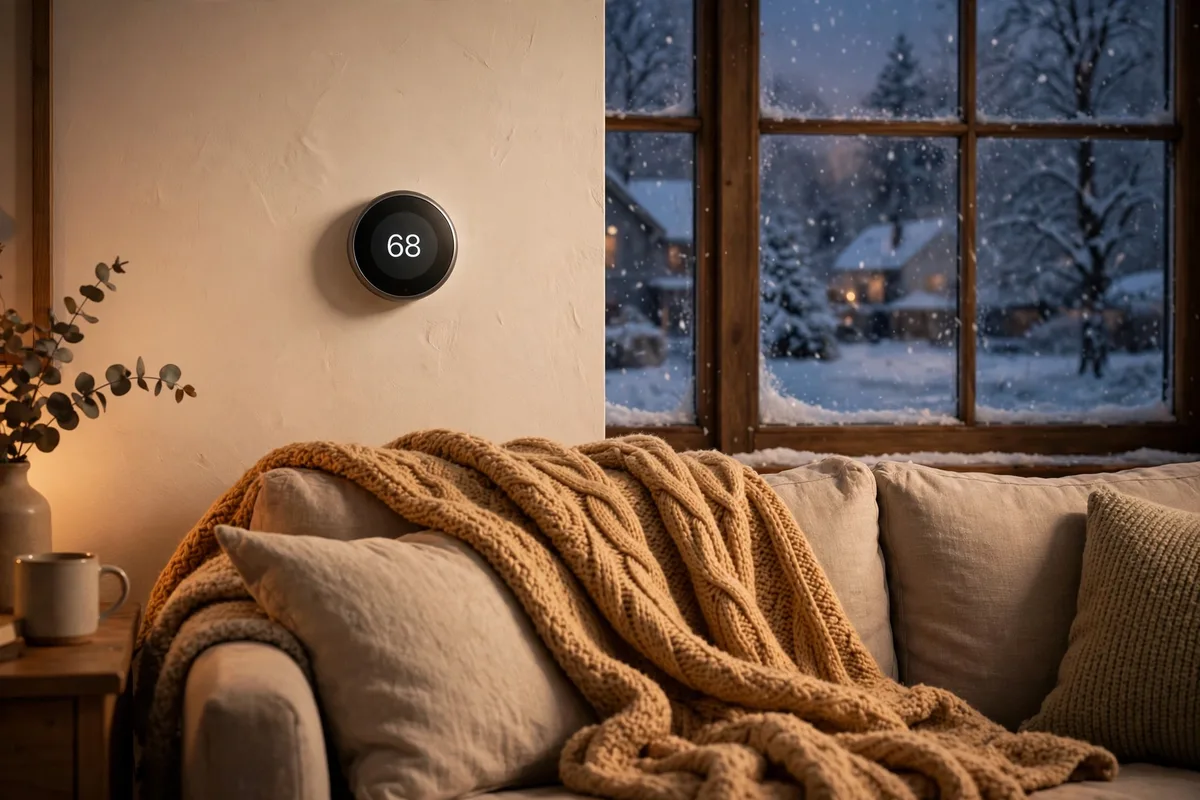
Why winter bills spike
Heat runs longer in winter than cooling runs in summer. A furnace on a cold night may run for hours at a stretch, while an air conditioner on a hot afternoon cycles on and off. Longer run time means more fuel and more electricity, and the bill reflects it.
Cold air also punishes leaks. A gap around a door, a bare duct in a crawl space, or a missing patch of insulation lets warm air out and cold air in. The furnace then runs longer to hold the same temperature. The colder the night, the faster the leak drains heat, which is why a cold snap shows up on the next bill.
The biggest heat wasters
- drafts: gaps around doors, windows, and attic hatches leak warm air all winter.
- clogged filter: a dirty filter forces the blower to work harder and stretches each heating cycle.
- thermostat habits: a high setting around the clock runs the furnace far more than a setback at night.
- duct leaks: torn or loose ducts spill warm air into crawl spaces, attics, and garages.
- worn equipment: a furnace with a weak blower or a dirty burner heats less per cycle and runs longer.
- space heaters: a space heater warms one room while the furnace still heats the rest, so the two run together.
What you can change this week
- Change the filter and open every vent, so the furnace moves air with ease.
- Seal the obvious drafts with weatherstripping on doors and caulk on window gaps.
- Set the thermostat lower at night and when the house sits empty, and keep it steady instead of swinging it up and down.
- Keep interior doors open so warm air moves between rooms instead of pooling in one hall.
- Close the fireplace damper when the fireplace sits cold, so warm air does not rise up the chimney.
- Check the attic hatch and crawl space door for gaps, and seal them with foam or weatherstripping.
When a technician should look
Call us when the bill jumps without a cold snap to explain it, when the furnace runs nonstop, or when rooms stay cold at a high thermostat setting. Those signs point to a duct leak, a failing blower, a stuck damper, or a burner fault. A technician checks airflow, ducts, and burner health in one visit.
Our Furnace Repair & Installation team checks the whole heating path, and a Maintenance & Tune-Up each fall keeps the system running clean before winter bills arrive.
Further reading: The U.S. Department of Energy Energy Saver site covers heating efficiency and home energy habits. U.S. Department of Energy Energy Saver
Frequently Asked Questions
Winter runs heat long hours on the coldest nights, while summer cooling runs in shorter bursts. Longer run time and cold air leaks push winter use higher.
Yes. A lower setting while you sleep trims run time. A steady setback each night adds up across a cold month.
Yes. A clogged filter forces the blower to work harder and stretches each heating cycle. A clean filter keeps airflow easy.
Yes, when they run for hours. A space heater warms one room while the furnace still heats the rest, so the two run together.
A sudden jump often traces to a cold snap, a stuck damper, a clogged filter, or a furnace fault. Compare the month with the same month a year back for a fair read.