Radiant Floor Heating
Radiant & Hydronic Heating in Colorado
Radiant floors and hydronic loops warm rooms evenly from the floor up. We repair cold loops and install radiant heat in new and existing rooms.
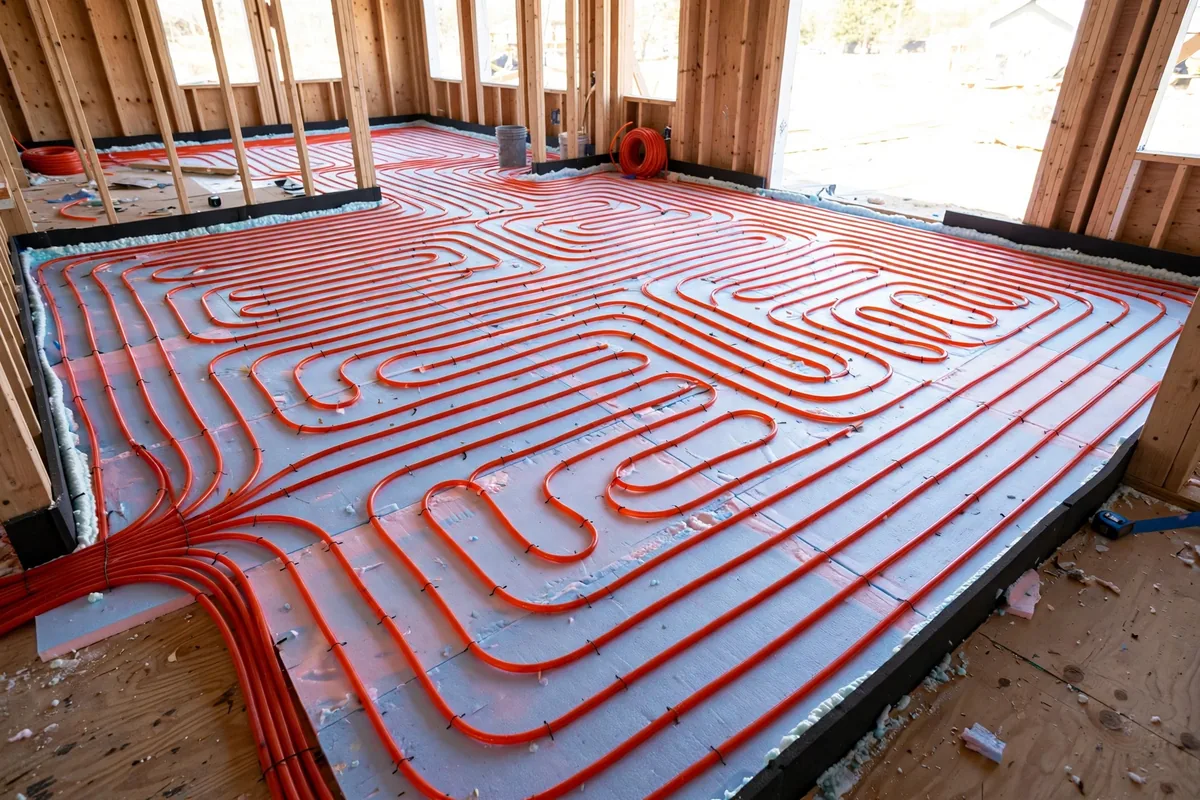
Radiant heat warms the floor, and the floor warms the room. Hot water runs through tubing under the floor, and the heat rises gently and evenly, with no drafts and no blowing air. A bathroom floor feels warm underfoot. A living room holds the same temperature from wall to wall. Hydronic loops carry that hot water from the heat source to each zone, and a manifold divides the flow so each zone runs its own setting.
For the full picture of how we serve homes across the state, see the homepage. This page covers the delivery side: floors, loops, manifolds, and zones. For the heat source that feeds those loops, see boiler repair and installation. For homes heated by warm air through ducts, see furnace repair and installation.
Signs Your Radiant System Needs Attention
- A cold loop. One floor zone stays cold while the rest warm up.
- Uneven floors. Parts of a room feel warm while other parts stay cool.
- Pressure drops. The gauge on the boiler or manifold falls over days or weeks.
- Drips at the manifold. Damp spots or drips around valves and connections.
- Clicking or ticking pipes. Pipes tick as they warm and cool, often from expansion against framing.
- A zone that will not answer the thermostat. The thermostat calls for heat, but the zone stays cold.
Radiant Floors
Radiant floors carry hot water tubing under the floor surface. Tile and stone conduct the heat well and feel warm underfoot. Wood floors work too, with tubing and controls matched to the wood so the floor warms gently without drying out. We install radiant floors in new builds, in remodels where the floor is already open, and in single rooms such as bathrooms.
Hydronic Loops and Manifolds
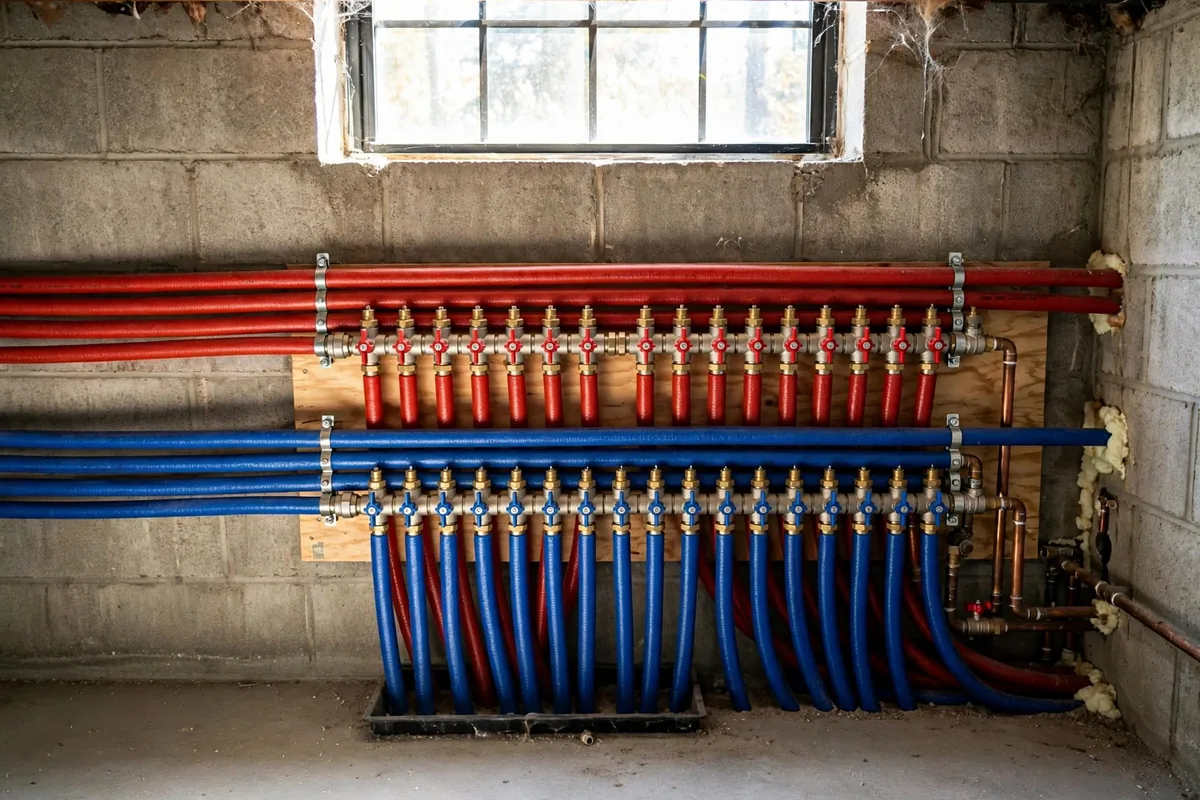
Hydronic loops are the tubing runs that carry hot water to each zone. The manifold is the control center: a row of supply and return valves that divides the flow between loops. We repair leaks at valves and connections, replace failed zone valves and actuators, rebalance loops that heat unevenly, and install new manifolds and loops for additions and remodels.
When Radiant Heat Fits, and When It Does Not
Radiant heat fits a new build or a remodel where the floor is already open, a bathroom that always feels cold, and a home where even, steady warmth without drafts matters more than fast warm-ups. It also fits a home that already heats with a boiler, since the same heat source can feed the new loops.
Radiant heat does not cool. A home that also wants summer cooling needs a separate cooling system, such as central AC or a mini-split. A home that needs heat in a hurry after a cold night may suit a furnace better, since forced air warms a room faster than a cold slab does.
Try This Before You Call
Radiant heat responds slowly, so give the system time after any change. These checks take a few minutes.
- Thermostat: set to Heat. Radiant floors respond slowly, so give the system time after a change before you judge it.
- Pressure gauge: read the gauge on the boiler. If it sits near zero or above 30 psi, stop and call us. Do not try to adjust it yourself.
- Zone valves: make sure the valves at the manifold for the cold rooms are open.
- Breaker and emergency switch: both must be on.
- Cold zones: note which rooms stay cold. One cold room points to that zone; a cold house points to the heat source.
If the system still will not run right after these checks, call us and describe what you found.
How Radiant and Hydronic Work Go
- You call, we dispatch. Describe the rooms, the trouble, and which zones feel cold.
- We test the full system. We check the manifold, valves, pressure, loops, and thermostat for each zone.
- We explain in plain language. We walk you through what we found and lay out repair or installation, including what each option involves for your floors and piping.
- We fit parts matched to your system. Repairs restore the failed valve, loop, or control and rebalance the zones. Installations lay the tubing, set the manifold, and connect the loops to the heat source.
- We verify before we leave. We run every zone through a full cycle, check floor temperatures and pressure, and show you the manifold and thermostat settings.
What You Can Expect
Expect a clear explanation before any work starts. During a repair, expect the affected zone to drain down, the failed part to come out, and the zone to refill and test. During an installation, expect the tubing to go in before the floor surface, and the system to run through a full test before the floor closes up.
After the visit, glance at the pressure gauge from time to time and note any drips at the manifold. A yearly tune-up checks pressure, valves, and zone balance before winter.
How Radiant Heat Compares With Other Heating Options
Radiant heat is delivery. A boiler is the source that heats the water. A furnace heats air and moves it through ducts, which warms a room faster but with drafts and uneven spots. A mini-split heats single rooms without ducts or water. A heat pump heats and cools from one unit.
Frequently Asked Questions
Yes. Wood floors work with radiant heat when the tubing and controls match the wood, so the floor warms gently without drying out. Tile and stone conduct heat well and feel warm underfoot. We look at the floor type and lay out the setup that fits it.
A cold zone usually means air in the loop, a stuck zone valve, a manifold valve that sits closed, or a loop that is out of balance. Check the thermostat for the zone first. If the zone stays cold, the valve, the loop, or the manifold needs a check.
Most hydronic radiant systems use a boiler as the heat source, since the boiler heats the water that runs through the loops. Some systems use a water heater or a heat pump as the source instead. We look at your setup and tell you what feeds your loops.
Yes. A single bathroom is a common radiant project, since tile floors feel cold in winter and the room is small. We run a loop for the bathroom, connect it to the heat source, and set its own thermostat so the room warms on its own schedule.
Clicking usually comes from pipes expanding as they warm and rubbing against framing or hangers. A few clicks at startup are normal. Loud or constant clicking can mean a hanger is too tight or a pipe runs without room to move, and it needs a check.
Radiant floors warm in stages. The tubing warms the floor first, and the floor then warms the room. A room with a cold slab takes longer than a room with a warm subfloor. The steady, even warmth is the payoff for the slower start.
Last updated: October 16, 2026.
Sources and Further Reading
These government pages explain the same topics in more depth.