Heating System Comparison
Boiler vs. Furnace: What Is the Difference?
A boiler heats water and sends it to radiators or floors. A furnace heats air and sends it through ducts. Both heat a home, and they feel and install very differently.
Last updated: October 16, 2026.
Boilers and furnaces both burn fuel to heat a home, and there the similarity ends. A boiler heats water and moves it through pipes to radiators, baseboards, or floor loops. A furnace heats air and moves it through ducts to vents in each room. The heat arrives by different paths, and the home feels the difference.
This guide compares the two on how they heat, what your home already has, comfort, and rooms. It keeps each side to a fair summary and links to the full service pages for detail.
The one-line difference
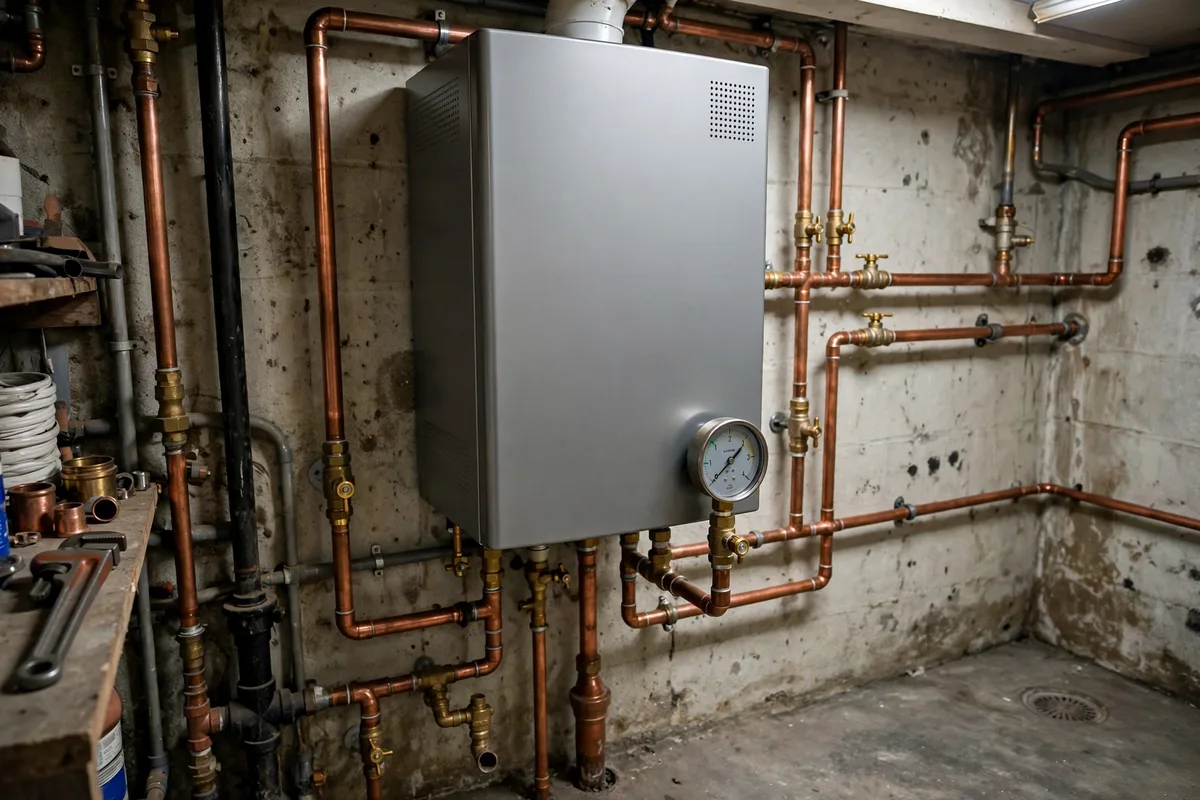
A boiler heats water. A furnace heats air. The boiler sends hot water through pipes to radiators, baseboards, or radiant floor loops, and those surfaces warm the rooms. The furnace sends warm air through ducts to vents, and the blower spreads it through the rooms.
That difference decides what a home needs to host each system: pipes and radiators for a boiler, ducts and vents for a furnace. Our Boiler Repair & Installation page covers boilers, and our Furnace Repair & Installation page covers furnaces.
How each one heats
A boiler fires a burner under a heat exchanger, warms water, and pumps it through a loop of pipes. Radiators or baseboards along the loop give off heat, and the cooled water returns to the boiler to warm again. The system runs quiet, because it has no blower pushing air.
A furnace fires a burner in a heat exchanger, warms air, and blows it through ducts. The blower pushes warm air to every vent, and cool air returns through return ducts to warm again. The heat arrives fast, which suits a cold morning when you want the house warm now.
What your home already has
The home you have often picks the system for you. A home with radiators or baseboards already has the pipes a boiler needs, and swapping in a new boiler keeps that network. A home with ducts already has the paths a furnace needs, and swapping in a new furnace keeps that network.
Switching from one to the other takes real work. A boiler-to-furnace switch needs a full duct run. A furnace-to-boiler switch needs pipes, radiators, and a boiler loop. Either switch makes sense during a major remodel, and rarely as a standalone project.
Comfort differences
Boiler heat feels steady and quiet. Radiators warm and hold heat, rooms stay even, and no blower stirs dust through the air. The heat lingers after the boiler cycles off, because radiators and floors hold warmth.
Furnace heat feels responsive and familiar. The thermostat calls, the blower runs, and the room warms in minutes. The same ducts carry cooling in summer, which a boiler cannot do. A clean filter and sealed ducts keep the air cleaner, and the blower mixes air so rooms even out fast.
Rooms, additions, and radiators
Boilers suit homes with radiant floors, because the same boiler that feeds radiators can feed floor loops. A bathroom or basement with radiant floor heat can tie into a boiler loop, and the rooms stay warm from the floor up. Our Radiant & Hydronic Heating page covers radiant installs that pair with boilers.
Furnaces suit homes that need cooling too and homes with even rooms and sound ducts. An addition with no ducts may suit a mini-split better than a duct extension, and our Ductless Mini-Split Services page covers that option.
Which one fits your home
Pick a boiler when your home already has radiators, baseboards, or radiant floors, and when quiet, steady heat matters most. Pick a furnace when your home already has ducts and needs cooling through the same system.
Tell us what your home has now, which rooms stay cold, and whether you need cooling too. We will walk through the fit for your home. Get an Estimate or call us at (303) 879-1746.
Further reading: The U.S. Department of Energy Energy Saver site covers heating system types and home heating basics. U.S. Department of Energy Energy Saver
Frequently Asked Questions
Yes. Some homes heat the main floor with a furnace and warm a basement or addition with a boiler loop. Each system covers the rooms it suits best.
No. A boiler moves hot water through pipes to radiators, baseboards, or floor loops, so a home with no ducts can still heat well.
A boiler usually runs quieter because it has no blower pushing air. A furnace hums as the blower moves warm air through ducts.
Yes. Some boilers heat tap water through an indirect tank. A technician can tell you if your boiler already does this.
Yes. A yearly visit checks pressure, the expansion tank, vents, and water lines so the system holds steady through winter.