Furnace Sizing
What Size Furnace Does Your Home Need?
The right furnace size matches your home heat loss on the coldest night. Bigger is not better, and smaller is not a bargain. Here is how sizing works.
Last updated: October 16, 2026.
Furnace size sounds like a simple question with a simple answer, but it is really a question about your home. The right size replaces exactly the heat your home loses on the coldest night. Too much furnace short-cycles and leaves rooms uneven. Too little furnace runs nonstop and still leaves rooms cold.
This guide explains what shapes the size your home needs, what goes wrong at each extreme, and how a technician sizes a furnace for a Colorado home. It covers altitude too, because thin mountain air changes the math.
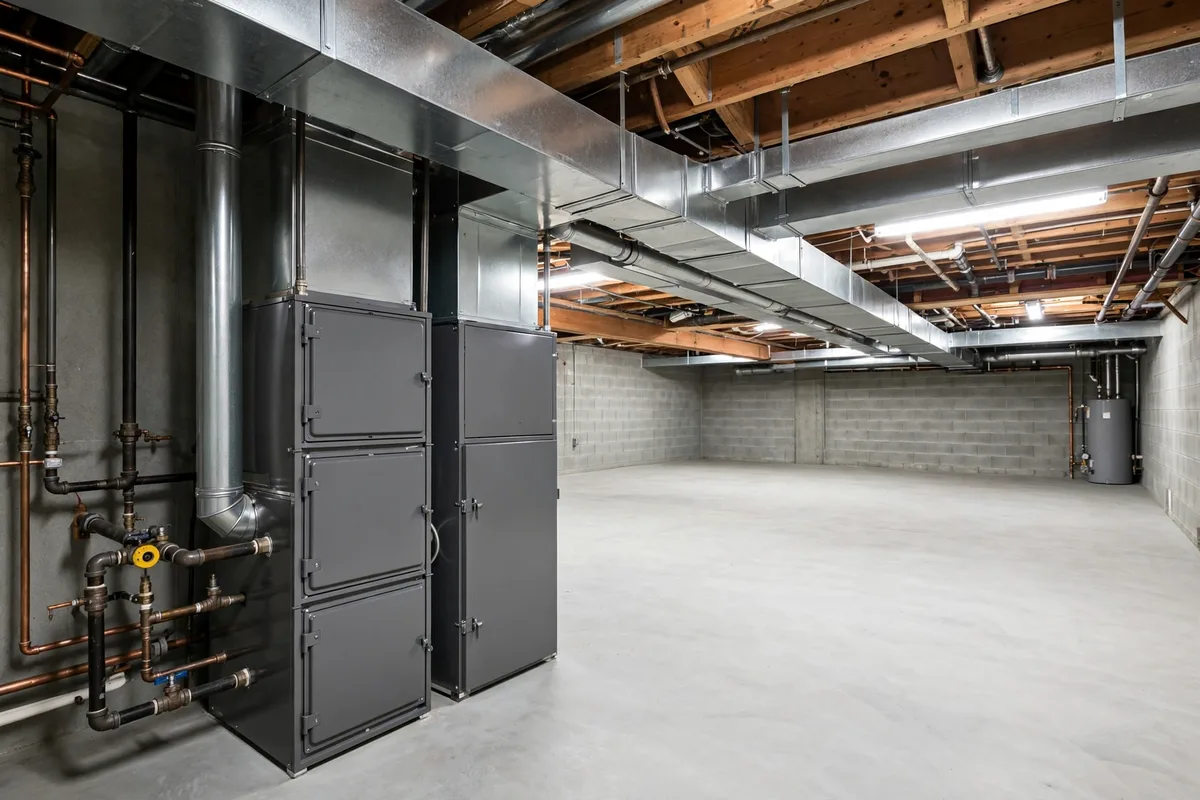
What furnace size really means
Furnace size means heating output, or how much heat the unit can add to your home in an hour. A bigger number means more heat per hour, not better heat. The goal is to match that output to the home heat loss, which is the heat that escapes through walls, windows, ceilings, and drafts on a cold night.
A matched furnace runs in long, steady cycles on cold days and holds every room even. A mismatched furnace, in either direction, runs wrong: too big and it blasts and stops, too small and it never stops. Comfort, wear, and energy use all follow from that match.
What shapes the size your home needs
- home size and layout: a bigger home loses more heat, and a sprawling ranch loses more than a compact two-story with the same floor area.
- insulation: a well-insulated home holds heat and needs less furnace, while a thinly insulated home needs more.
- windows: big, old, or single-pane windows leak heat fast, and south windows gain sun by day and lose heat at night.
- ceilings: tall ceilings hold more air to heat, and a vaulted great room needs more output than a flat-ceiling room.
- drafts: gaps around doors, attic hatches, and crawl spaces leak warm air all winter.
- ductwork: leaky ducts spill heat before it reaches rooms, so the furnace must make extra heat to cover the loss.
- altitude: thin mountain air carries less oxygen and less heat, so a furnace at altitude needs sizing for the elevation.
Why oversized furnaces misbehave
An oversized furnace heats the house fast, shuts off, and starts again minutes later. Those short cycles, called short cycling, wear the ignition, the blower, and the controls with constant starts and stops. Rooms near the thermostat warm fast and shut the furnace off, while far rooms never catch up, so the house feels uneven.
Short cycling also skips the steady airflow that evens out a home. The furnace never runs long enough to push warm air to the far corners, and the rooms that need heat most stay cold. Homeowners often blame the thermostat, when the real fault is a furnace that outruns the house.
Why undersized furnaces struggle
An undersized furnace runs nonstop on cold nights and still leaves rooms cool. The burners fire, the blower pushes, and the house never reaches the thermostat setting. The furnace wears fast from constant running, and the coldest rooms stay cold no matter how long it runs.
An undersized furnace also leaves no margin for a cold snap. A unit that barely holds the house on an average January night falls behind when a cold front drops temperatures further. Sizing must cover the coldest nights, not the average ones.
How we size a furnace
We start with the home, not with the old furnace. We measure rooms, note insulation and windows, check ductwork for leaks, and account for altitude. Then we run a heat-loss check that adds up how much heat the home loses on a cold night. That total sets the furnace size.
Copying the old furnace size skips all of that. Insulation, windows, and additions may have changed the load since the old unit went in, and the old unit may have been wrong from the start. Our Furnace Repair & Installation page covers how we size and install furnaces across Colorado, and a Maintenance & Tune-Up keeps the sized unit running clean.
Further reading: The U.S. Department of Energy Energy Saver site covers heating system sizing and home heating basics. U.S. Department of Energy Energy Saver
Frequently Asked Questions
No. Square footage gives a rough start, but insulation, windows, ceilings, and altitude change the answer. A heat-loss check weighs all of them.
A big furnace heats fast, shuts off, and starts again in short bursts. Short cycles wear parts, leave rooms uneven, and waste energy.
A small furnace runs nonstop on cold nights and still leaves rooms cool. It wears out faster from constant running.
Yes. Thin mountain air carries less oxygen and less heat, so a furnace at altitude needs sizing for the elevation, not for sea level.
Not always. Insulation, windows, and additions may have changed the load. A fresh sizing check beats copying the old nameplate.