Furnace Replacement Decisions
Repair or Replace Your Furnace?
Repair when the fault is small and the furnace still heats well. Replace when breakdowns repeat, rooms stay uneven, or the core of the unit wears out. Here is how to weigh it.
Last updated: October 16, 2026.
A furnace that breaks down on a cold night forces a fast decision, and fast decisions favor the familiar choice: fix it. Sometimes that is right. Sometimes the same furnace breaks again a month later, and the second repair buys little more than a second bill. This guide gives you a calmer way to weigh the call before the breakdown.
The answer rests on three things: what failed, how the furnace has behaved over time, and how well it heats your home now. Walk through each one, and the right choice usually shows itself.
The signs that point to repair
Repair makes sense when the fault is small, the furnace heats well, and breakdowns stay rare. A failed igniter, a dirty flame sensor, a worn belt, or a bad thermostat each take one visit and leave a sound furnace behind. A furnace that heats every room evenly and cycles in long, steady runs has life left in it.
Repair also makes sense when the failed part sits outside the core of the unit. A blower motor, a control board, or a gas valve can fail on an otherwise sound furnace, and swapping the part restores full service. Age alone does not doom a furnace, and a well-kept unit can run many years past a rough one of the same age.
The signs that point to replacement
Replacement makes sense when breakdowns repeat, when the same system fails twice in one winter, or when rooms stay uneven no matter what you fix. A furnace that short-cycles, bangs, or blows cold air after a repair is telling you the core wears out, not that one more part will save it.
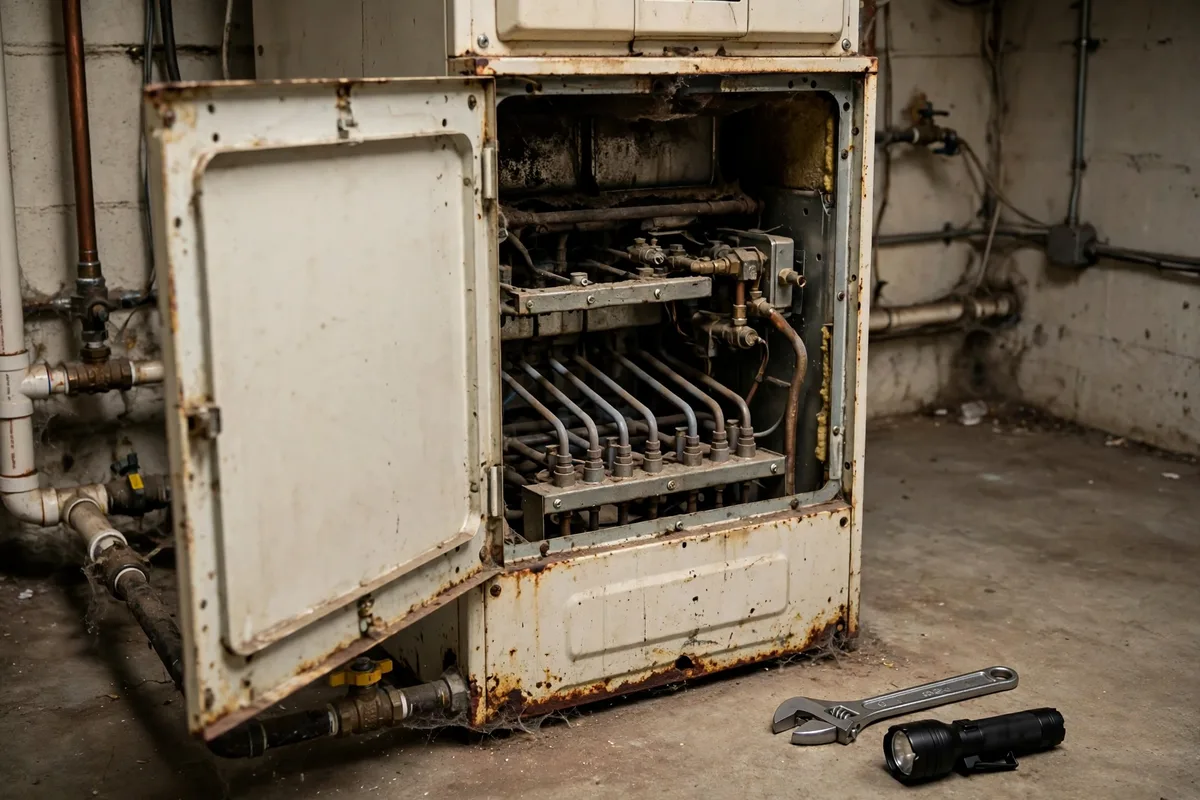
A cracked heat exchanger points to replacement in most cases. The heat exchanger carries combustion gases, and a crack lets those gases mix with indoor air. A technician who finds a crack will shut the furnace down for safety. Rust, soot, and a burner flame that burns yellow instead of blue also signal deep wear.
Questions to ask before you decide
- What failed, and does the failure touch the core of the unit or a small part?
- How many times has the furnace needed repair, and did the same fault come back?
- Does the furnace heat every room evenly, or do some rooms stay cold?
- Does the furnace short-cycle, bang, or blow cold air between repairs?
- Has the home changed with insulation, windows, or additions that shift the load?
- Does the furnace still match the home, or was it sized for a different house?
What replacement involves
Replacement starts with sizing. A technician measures the home, checks insulation and windows, inspects the ducts, and accounts for altitude. The new furnace then matches the home heat loss on the coldest night, which keeps cycles long and rooms even. Copying the old furnace size skips that step and can repeat the old problems.
Install day swaps the old unit for the new one, ties in gas and venting, connects the ducts, and tests the full heating cycle. A tune-up after install confirms the burner, the blower, and the safety controls all run as they should. Our Furnace Repair & Installation page covers how we size and install furnaces across Colorado.
Further reading: The U.S. Department of Energy Energy Saver site covers heating system choices and when replacement makes sense. U.S. Department of Energy Energy Saver
Frequently Asked Questions
Age alone does not decide it. A furnace with a sound heat exchanger and a small failed part often earns a repair, while repeated breakdowns point toward replacement.
Yes, when it cycles oddly, leaves rooms uneven, or needs repair after repair. Steady comfort matters as much as raw heat.
Sometimes, but a cracked heat exchanger often signals deep wear. A technician weighs the state of the rest of the unit before recommending a part-only fix.
Track what failed each time. Two unrelated small fixes differ from two failures in the same worn system, and the pattern guides the call.
Not by itself. Uneven rooms often trace to ducts, insulation, or airflow. A new furnace plus a duct check fixes both sides.